
Dust mite allergy in children: signs and what you can do at home
In this article
You can recognise dust mite allergy in children by symptoms that last for weeks or months: a blocked or runny nose, sneezing, itchy eyes, coughing at night and poor sleep, sometimes eczema or asthma. Symptoms are often worst in the morning and in October and November. The GP confirms the allergy with a blood test or a skin prick test.
What are the symptoms of dust mite allergy in a child?
The allergy mainly affects the mucous membranes of the nose, eyes and airways. In an allergic child these are irritated for a long time, a bit like a cold that won't go away. Look out for these signs:
Nose and eyes
- Blocked or runny nose, often with clear mucus
- Lots of sneezing, especially after getting up
- Itchy, red or watery eyes
- Frequent nose rubbing
Airways
- Coughing, especially at night and in the morning
- Wheezing or shortness of breath
- More trouble during exercise
Sleep and energy
- Snoring or mouth breathing
- Restless sleep, waking up tired
- Pale, dark circles under the eyes, less energy
Skin
- Dry, itchy patches or eczema
- In young children, sometimes red, itchy cheeks
Read more about skin symptoms in dust mite rash.
Is it a dust mite allergy or a cold?
Especially in autumn the two look very similar. The biggest difference is duration: a cold clears up by itself, an allergy stays.
| Cold | Dust mite allergy | |
|---|---|---|
| Duration | Usually 1 to 2 weeks | Weeks to months, keeps coming back |
| Fever or feeling unwell | Can occur | No |
| Itchy nose and eyes | Rarely | Often |
| Mucus | Can become thick, yellow or green | Usually clear and watery |
| When it is worst | Varies | In the morning, after a night in bed, and in autumn |
From what age can a child develop a dust mite allergy?
A dust mite allergy usually develops only after several years of exposure. Many children get their first clear symptoms around the age of four or later. In babies and toddlers, nasal symptoms are more often caused by viruses than by an allergy. In recent years, however, paediatricians have been seeing the allergy more often in younger children, sometimes around the age of one, for example in combination with eczema.
How is dust mite allergy tested in children?
The GP or paediatrician can confirm the allergy in two ways:
- Blood test: measures the antibodies (IgE) against dust mites. Possible at any age.
- Skin prick test: a drop of allergen on the forearm, followed by a small prick. After about fifteen minutes you can see whether the skin reacts. Usually from around the age of four.
In young children a test can still be negative while symptoms are already present. The doctor then treats based on the symptoms. How to read a result is explained in reading your allergy test: class and IgE value.
What can you do at home about dust mites in a child's room?
Dust mites are present in every home and can never be removed completely. What you can do is reduce the amount of allergen where your child spends the most hours: the bed. Hospitals stress that it takes a package of measures. A single measure achieves little.
- Wash bedding at 60 °CSheets and pillowcases every week, duvet and pillow regularly. When replacing bedding, choose items that can be washed at 60 °C.
- Limit soft toys in bedChoose one or two favourites that can be washed at 60 °C. Which alternatives such as freezing do or don't work is explained in sprays and home remedies against dust mites.
- Less textile in the roomA smooth floor instead of carpet, few cushions and rugs, toys in closed boxes. Smooth materials hold less dust.
- Keep the room cool, dry and ventilatedDust mites thrive in a warm, humid environment. Keep ventilation open and don't use a humidifier. See humidity and dust mites.
- Clean the mattressThe mattress is never washed and contains the most allergen. How to tackle it is explained in mattress cleaning: dust mites and stains.
- Consider covers only as an additionIf the measures above don't help enough, you can try special covers for the mattress, duvet and pillow. It is uncertain whether your child will notice a difference.
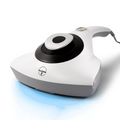
Measures at home reduce exposure, but they don't replace treatment. According to the Dutch GP guidance site Thuisarts, it is uncertain whether special vacuum cleaners, air filters or mite-killing products reduce symptoms. These products can remove or capture dust and allergen from textiles; whether that leads to fewer symptoms in your child has not been proven. If you are considering a vacuum cleaner for the mattress, what to look for in a dust mite vacuum cleaner explains which features can be verified and which claims mean little.
What treatment is available for children with dust mite allergy?
Most children with a dust mite allergy get their symptoms well under control with a combination of measures at home and medication. The GP chooses what suits the severity of the symptoms. Possible options include:
- Antihistamines: tablets, syrup, eye drops or nasal spray against itching, sneezing and a runny nose. They work quickly.
- Corticosteroid nasal spray: for a nose that is blocked almost every day. Only works with daily use and only after several weeks. Prescription only.
- Saline nasal spray: rinses the nose and can be used freely.
- Immunotherapy: in some cases, through a specialist. The body gradually gets used to the allergen.
- is regularly short of breath or wheezes and doesn't yet have asthma medication;
- uses asthma medication that doesn't help enough;
- has been sleeping badly for weeks because of a blocked nose or coughing;
- often has ear or sinus infections.
Call 112 immediately if your child is very short of breath, can no longer talk or gets blue lips.
Frequently asked questions about dust mite allergy in children
Do children grow out of a dust mite allergy?
That can't be predicted. The amount of symptoms often varies over the years: some children have fewer problems as they get older, in others the allergy stays. Good treatment means most children can live (almost) symptom-free.
Can a child with a dust mite allergy have soft toys in bed?
Yes, but limit the number and choose soft toys that can be washed at 60 °C. Soft toys collect skin flakes and moisture, which makes them a favourite spot for mites.
Why does my child have symptoms mainly in the morning?
Your child spends the whole night with their nose and mouth close to the pillow, mattress and duvet, the places with the most allergen.
Can a dust mite allergy cause or worsen asthma?
Dust mite allergy and asthma often occur together in children, and contact with dust mites can trigger asthma symptoms. A child with asthma and a suspected dust mite allergy should therefore be followed by the GP or paediatrician.
Can a child with a dust mite allergy react to prawns?
Very occasionally. Dust mite proteins resemble proteins in shellfish, which can cause a cross-reaction. If your child gets symptoms after eating prawns or other shellfish, see your GP.
Sources (in Dutch)
- Thuisarts: Ik wil iets doen tegen huisstofmijt
- Thuisarts: Wanneer contact opnemen bij allergie voor huisstofmijt?
- Erasmus MC Sophia: Huisstofmijtenallergie bij kinderen
- Martini Ziekenhuis: Huisstofmijtallergie bij kinderen
- Isala: Allergie huisstofmijt bij kinderen
- Rijnstate: Adviezen bij huisstofmijtallergie (kinderen)
This article is for general information and does not replace advice from your GP or paediatrician.